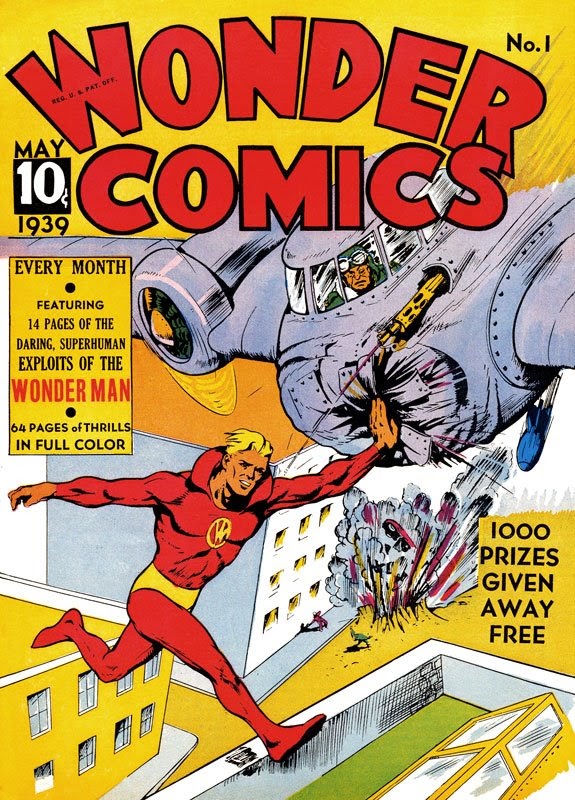
Wonder Man is a
fictional comic book superhero, created by
Will Eisner, whose first (and only) appearance was
Wonder Comics #1 (May, 1939).
The character is of some historical significance by virtue of the
lawsuit that resulted from his only appearance.
Fictional character history
Wonder Man's secret identity is Fred Carson. During an excursion to
Tibet, an old monk bestows Carson with a ring that gave him the power to fight evil when the need arose. His powers are almost exactly like those of
Superman, the character he's based on.
Publication history
Wonder Man was created by Will Eisner in the Eisner-Iger Shop for
Victor Fox, who was
publishing astrology magazines when he ran across his distributor's reports on the incredible sales for National Periodicals'
Action Comics in February 1939. He immediately decided to get into the comic
book business, setting up offices in the same building DC had theirs, then contacted Eisner. Using the pen name Willis, Eisner wrote and drew the first issue of
Wonder Comics which appeared on the news stands less than six weeks later.
Lawsuit
On March 15, 1939 DC Comics brought a
copyright infringement lawsuit against Fox, due to the character's similarities to Superman, as well as story and illustration elements that were similar to previous Superman adventures. The case was brought to court in
Detective Comics, Inc. v. Bruns Publications, Inc., 111
F.2d 432 (
2d Cir. 1940), in which Eisner defended the originality of his creation. Despite this testimony, the subsequent decision forced Fox to drop the character after just one issue.
Wonder Comics however, continued as a title, featuring
Yarko the Great in #2, then changed its name to
Wonderworld Comics featuring
The Flame in #3 and continued for another 30 issues.
This was the first
copyright lawsuit in comic book history and set a precedent for DC Comics' vigorous protection of its characters (see also
National Comics Publications v. Fawcett Publications).
The dispute is depicted in disguised fashion in Eisner's
semi-autobiographical graphic novel,
The Dreamer. However, this depiction is at odds with Eisner's own testimony at the trial, transcripts of which were unearthed in 2010.
[1]
See
Master Man for a similar character.
External links


.jpg)