Mendie Koenig: Last of the East Side Kids? | |||
 |
Just received word that Emanuel "Mendie" Koenig, who appeared in the final 1945 season of the East Side Kids at Monogram, passed on January 4 at age 92. In tribute to Mendie, I am cutting and pasting the contents of an email that he sent to me in 2006 (please excuse the caps, which are his own keystrokes):
 "HOW MENDIE KOENIG BECAME A FILM ACTOR, AND HIS EXPERIENCES ON THE LEGITIMATE STAGE" (THIS WILL BE EXPRESSED AND WRITTEN INFORMALLY. NO ATTEMPT WILL BE MADE TO CORRECT GRAMMATICAL OR SPELLING ERRORS.) (DATES MAY BE SLIGHTLY CONFUSED DUE TO MY MEMORY OF MY ADVANCED YEARS.) HERE GOES: IN 1938, I WAS 18 YEARS OLD, ATTENDING L.A. CITY COLLEGE, AND TAKING COURSES SUCH AS: ADVERTISING, SALESMANSHIP, BOOKKEEPING,ETC. IT WAS THE END OF THE SEMESTER, AND I WAS GOING HOME ON THE "B"STREETCAR TO WHERE I LIVED WITH MY PARENTS IN BOYLE HEIGHTS, LOS ANGELES. I WAS FEELING PRETTY BLUE AND FRUSTRATED. I WAS NOT HAPPY WITH WHAT WAS HAPPENING AS FAR AS MY EDUCATION WAS CONCERNED. I WASN'T EXCITED OR ENTHUSED ABOUT THE COURSES I WAS TAKING. I DIDN'T WANT TO QUIT SCHOOL, AND I DIDN'T KNOW WHAT TO DO. ON THE STREETCAR, WAS AARON RELLOSSOROFF. WE WERE NOT REALLY GOOD FRIENDS, JUST CASUAL FRIENDS. AARON WAS WATCHING ME. HE CAME OVER AND SAT NEXT TO ME. HE INQUIRED ABOUT WHAT WAS TROUBLING ME. (I AM GOING INTO DETAIL ABOUT THIS INCIDENT, BECAUSE AS YOU WILL SEE, IT WAS THE TURNING POINT OF MY YOUNG LIFE.) I EXPLAINED TO AARON HOW I FELT. HE LISTENED CAREFULLY. HE SAID, " MENDIE, WHY DON'T YOU SWITCH TO A DRAMA COURSE?" "DRAMA? WHY?" "L.A.CITY COLLEGE HAS A TERRIFIC DRAMA DRAMA COURSE, AND YOU WOULD BE A NATURAL" "WHAT DO YOU MEAN?" "WELL, YOU"RE ALWAYS JOKING AND CLOWNING AROUND...YOU MAKE PEOPLE LAUGH....YOU WOULD BE A NATURAL ACTOR." JUST LIKE THAT...IN AN INSTANT....I DECIDED THAT'S WHAT I WOULD DO!! TAKING A "COMMERCIAL" COURSE WASN'T REALLY MY IDEA. IT WAS THE IDEA OF MY SISTER, BEATRICE. SHE WAS THINKING OF ME, FIGURING A COURSE LIKE THIS WAS BETTER FOR MY HEALTH. IT DID NOT INVOLVE MUCH HOMEWORK. IT WAS VERSUS A "GENERAL" COURSE WHICH WOULD PREPARE ME FOR ADVANCED COLLEGE AND MUCH STUDY. HER THINKING WAS STRICTLY FOR MY BENEFIT. I INTERNALIZED HER BELIEFS, NOT REALLY MINE. I WAS BEING TOLD BY AARON WHAT I WAS GOOD AT. IT REFLECTED MY DEEP INTERESTS, STRENGTHS, AND TALENTS. OPPORTUNITY WAS KNOCKING AND I HEARD IT LOUD AND CLEAR. I HAD NO ONE TO DISCUSS THIS WITH, BUT I INSTINCTIVELY FELT THIS IS WHAT I SHOULD DO. (INCIDENTALLY, I RAN INTO AARON A FEW TIMES IN THE NEXT COUPLE OF YEARS. HE HAD CHANGED HIS NAME FROM AARON RELLOSSOROFF, TO DICK HOWARD.) I ENROLLED AS A DRAMA MAJOR. CITY COLLEGE HAD A FINE REPUTATION AND WAS NOTED FOR THE DRAMA DEPARTMENT AND COURSES. IT WAS A DETAILED AND THOROUGH COURSE INVOLVING SPEECH, PANTOMIME, DIRECTION, STAGE MOVEMENTS, STAGE CONSTRUCTION ETC. WITHOUT GOING INTO DETAI L, I RECEIVED A VALUABLE INDOCTRINATION INTO THE THEATER AND STAGE ACTING. FOR TWO YEARS, I WAS THE ACTING PARTNER OF A GIRL NAMED DONNA MULLINGER, FROM IOWA. SHE LATER BECAME DONNA REED. I ALSO PERFORMED EXPERIMENTAL PLAYS WITH ALEXIS SMITH. WHEN I LEFT CITY COLLEGE, I FELT SO ENTHUSED ABOUT ACTING, THAT I FELT IF I COULDN'T MAKE A LIVING ACTING, I WOULD NOT KNOW WHAT TO DO. HOWEVER, FOR PRACTICAL REASON AND TO HAVE A REGULAR INCOME I TOOK A JOB AS A CLERK WITH THE U.S.ENGINEERS. MY PARENTS WERE HAVING A DIFFICULT TIME MAKING ENDS MEET, AND I FELT I HAD TO HELP OUT. ALSO WE WERE INVOLVED IN WORLD WAR II, AND MEN WERE BEING DRAFTED FOR MILITARY SERVICE. IN 1942, PRESIDENT ROOSEVELT FELT IT WAS IMPORTANT TO HAVE A ROAD FROM ALASKA NEAR THE ALLUTION ISLANDS, NEAR OUR ALLY RUSSIA. THE PLAN WAS TO HAVE A ROAD ALONG WESTERN U.S. AND PLANS WERE MADE FOR THE PAN AMERICAN HIGHWAY, WHICH WAS TO GO FROM ARGENTINA TO ALASKA. WORD CAME TO THE U.S.ENGINEERS, THAT HELP WAS NEEDED ON THE COSTA RICCAN SEGMENT OF THE HIGHWAY. TRYING TO AVOID THE DRAFT, I VOLUNTEERED, AND WAS SELECTED. I WAS ASSIGNED TO SAN JOSE, COSTA RICA, AND BECAME THE HEAD OF THE PAYROLL DEPT. FOR MILITARY AND PRIVATE EMPLOYEES WORKING ON THE HIGHWAY IN PANAMA AND COSTA RICA. AFTER ABOUT A YEAR, THE WAR WAS NOT GOING WELL FOR U.S., AND ROOSEVELT WAS RECALLING ALL MALE CIVILIANS WORKING ON THE HIGHWAY, AND REQUESTING THEM TO ENLIST IN THE ARMED SERVICES. I ENLISTED IN THE U.S. ARMY. WHILE WAITING TO BE CALLED, I AUDITIONED FOR THE WILSHIRE EBELL THEATER MUSICAL CALLED "ON THE LEVEL". THIS WAS A PROFESSIONALLY WRITTEN AND ORCHESTRATED PERFORMANCE, SCHEDULED TO PLAY FOR SIX WEEKS. MY CITY COLLEGE TRAINING SOON BECAME EVIDENT, AND I ENJOYED BEING CAST AS THE LEADING CHARACTER, SINGING AND DANCING IN THIS ARMY ENGINEERS ORIENTED MUSICAL REVUE. THE ARMY POSTPONED MY INDUCTION DUE TO THE SHOW, AND I HAD MY FIRST TASTE OF PROFESSIONAL GREASEPAINT. IT STRENGTHENED MY BELIEF THAT ACTING IS THE ONLY THING FOR ME. AFTER ABOUT A YEAR IN THE ARMY, BEING A SKINNY KID, AND NOT CUT OUT FOR THE RIGORS OF ARMY LIFE, I WAS HONORABLY DISCHARGED. I DECIDED TO GET AS MUCH ACTING EXPERIENCE I COULD GET. GETTING INTO FILMS WAS A DIFFICULT TASK. IN THOSE DAYS OF THE BIG STUDIOS, NO ONE COULD GET A MOVIE JOB UNLESS THEY BELONGED TO THE SCREEN ACTORS GUILD. NO ONE COULD GET INTO THE SCREEN ACTORS GUILD, UNLESS THEY HAD A PART IN A MOVIE. IT WAS A CATCH 22. I WAS AN INEXPERIENCED NOVICE, BUT I WAS DETERMINED. WITHOUT GOING INTO DETAIL, I LEARNED THE "ROPES" AND I AUDITIONED FOR SHOWS....AND I WAS FAIRLY SUCCESSFUL. SOME OF THE PLAYS I AUDITIONED FOR AND WAS ACCEPTED ARE: A PLAY AT THE HAMPSHIRE PLAYHOUSE WITH MARIA RIVA, MARLENE DIETRICH'S DAUGHTER (I FORGOT THE NAME OF THE PLAY.) AN ENGLISH BUTLER IN P.G. WODEHOUSE'S, "LEAVE IT TO PSMITH". IN THE ACTOR'S ALLEY PLAYHOUSE, I PLAYED THE LEAD IN "THE MOUNTAINS COME TO THE GOLDSTEINS". I PLAYED A 75 YEAR OLD MAN OPPOSITE HELEN TOBIAS FROM THE NEW YORK STAGE, WHO WAS REALLY 75. (I WAS ABOUT 23 AT THE TIME.} (WILLIAM JEFFREYS, A SILENT STAR COWBOY ACTOR, WROTE THE PLAY AND DIRECTED IT. WE BECAME GOOD FRIENDS, AND HE ENCOURAGED ME TO CONTINUE GETTING EXPERIENCE.) A COCKNEY CHARACTER, A FRIEND OF ALFRED DOOLITLE IN PYGMALIAN. HENRY ALDRICH IN "WHAT A LIFE". BANJO IN "THE MAN WHO CAME TO DINNER" ( THE JIMMY DURANTE CHARACTER. THE COMEDIAN AND DANCER IN "THE TIME OF YOUR LIFE" ( THE GENE KELLY ROLE.) AND SO MANY MORE OF WHICH I HAVE FORGOTTEN. TO FILL IN BETWEEN PLAYS, I WENT TO WORK FOR THE MAX REINHARDT SCHOOL OF ACTING. THERE I ADDED TO MY EXPERIENCE BY BUILDING AND DESIGNING STAGE SETS, AND BEING THE STAGE MANAGER FOR ALL THE PRODUCTIONS. THIS WAS A GREAT EXPERIENCE WHICH INCLUDED "FILLING IN" FOR ACTORS WHO BECAME SICK OR FOR SOME OTHER REASON, COULD NOT GO ON. THIS WAS A LAST MINUTE THING, AND I HAD TO DO A LOT OF IMPROVISING, BUT "THE SHOW MUST GO ON." (ONE TIME I HAD TO PLAY THE PART OF A LITTLE GIRL, WIG AND ALL. THE AUDIENCE HOWLED, BUT THEY LOVED IT.) THE NEXT EPISODE CHANGED MY PROFESSIONAL LIFE. I WAS ASKED BY JACK GELLER, WHO WAS THE ADMINISTRATOR OF THE MAX REINHARDT SCHOOL OF ACTING TO PERFORM IN A MAJOR ROLE IN A NEW PLAY, WHICH THE AUTHORS WERE "TRYING OUT" BEFORE TAKING IT TO BROADWAY IN NEW YORK. THE CHARACTER HAD TO HAVE RED HAIR, WHICH WAS IMPORTANT TO THE CONTEXT OF THE PLAY. CALLED "SPRING GREEN." OBVIOUSLY, I DID NOT HAVE RED HAIR, BUT THEY SAID THEY WILL ARRANGE TO HAVE MY HAIR DYED RED, AND AND THEN RETURNED TO MY ORIGINAL COLOR AT THE CONCLUSION OF THE PERFORMANCES. THEY WOULD TAKE CARE OF ALL APPOINTMENTS AND EXPENSES. I AGREED. THEY ARRANGED AN APPOINTMENT AT FREDRICKS HAIR SALON IN HOLLYWOOD, WITH HAIRDRESSER ALFRED LA RUE. ALFRED (AL) DID THE WORK ON MY HAIR AND INQUIRED AS TO WHY THE COLOR CHANGE. I EXPLAINED, AND ASKED HIM IF HE EVER THOUGHT OF CHANGING HIS PROFESSION AND BECOMING AN ACTOR. HE LAUGHED. THE PLAY RAN FOR THREE WEEKS (LUCKILY, BECAUSE MY HAIR WAS GROWING AND THE ORIGINAL COLOR WAS BECOMING EVIDENT..) BACK I WENT TO FREDRICKS, AND MR. ALFRED LA RUE. HE COULDN'T GET MY HAIR BACK TO IT'S ORIGINAL COLOR, BUT TO COMPENSATE I AGREED TO HAVE IT CUT SHORT TO A "BUTCH" STYLE. BY THIS TIME WE HAD BECOME FRIENDS. I TOLD AL THAT THEY WERE CASTING "BLIND ALLEY" AT THE PLAYHOUSE, AND HE WOULD BE A NATURAL IN THE LEAD. (CHESTER MORRIS PLAYED THE PART IN THE ORIGINAL FILM, THEN HUMPHREY BOGART IN THE SEQUEL.) I WAS JUST MAKING CONVERSATION AS I BELIEVED HE WAS NOT INTERESTED. BUT HE WAS. I TOLD HIM I WOULD CALL HIM WITH THE DETAILS, WHICH I DID. HE CAME DOWN, TRIED OUT FOR THE PART, WAS SUCCESSFUL, AND APPEARED IN THE PLAY. AGENTS AND TALENT SCOUTS VISITED THE PLAYHOUSE, ALWAYS SEEKING NEW TALENT. ONE GUY FROM UNIVERSAL STUDIOS WAS ATTRACTED TO AL, AND ARRANGED FOR FILM TEST FOR HIM. UNIVERSAL CONTRACTED HIM AND CAST HIM IN SOME FORGETTABLE "B" PICTURES, UNTIL A PART CAME ALONG IN AN ALSO A FORGETTABLE WESTERN FLICK. AND A NEW COWBOY ACTOR, "LASH LA RUE" WAS CREATED!! AL AND I CONTINUED TO COMMUNICATE, AND ONE MORNING HE PHONED ME AND TOLD ME UNIVERSAL WAS CASTING "RIVER GANG", AND THERE COULD BE SOMETHING IN IT FOR ME. CHARLES DAVID, HUSBAND OF DEANNA DURBIN WAS DIRECTING AND HOLDING TRYOUTS. WOULD I BE INTERESTED? I EXPLAINED MY DILEMMA ABOUT WORKING AT THE STUDIO, AND BELONGING TO THE SCREEN ACTORS GUILD (SAG), AND HE SAID IT'S WORTH A TRY. HERETOFORE, I COULDN'T EVEN GET PAST THE GUARDS AT THE STUDIOS, BUT WITH AL (LASH), WE WERE USHERED UP TO CHARLES DAVID'S OFFICE. I "READ" FOR HIM, HE SAID I WAS EXACTLY THE TYPE HE WAS LOOKING FOR, AND CALLED THE CASTING OFFICE, AND TOLD THEM HE WAS SENDING ME TO THEM. "RIVER GANG" HAD GLORIA JEAN IN THE LEADING ROLE, AND SHELDON LEONARD, JOHN QUALEN AND KEEFE BRASELLE IN FEATURED ROLES. THE CASTING OFFICE GAVE ME SOME PAPERWORK TO TAKE TO THE OFFICE OF SAG, AND TOLD ME IT WOULD BE $54 TO JOIN. THEY ASKED ME WHO MY AGENT WAS, AND WHEN I TOLD THEM I DIDN'T HAVE ONE, THEY ARRANGED A MEETING FOR ME WITH MR. GERALD S. HERDAN, AN AGENT WITH AN OFFICE ON THE SUNSET STRIP. MR. HERDAN WAS THE AGENT OF SHELDON LEONARD AND JOHN QUALEN, WHO WERE ALSO CAST IN THE FILM, WHICH WAS THE REASON THIS WISE CLERK (BLESS HER!) RECOMMENDED I GO TO HIM. I DIDN'T HAVE $54 DOLLARS FOR SAG, AND NEITHER DID AL. HE WAS DRIVING HIS GIRL FRIEND'S CAR, AND WAS WILLING TO DRAG ME ALL OVER TOWN. I CALLED MY PARENTS, AND TOLD THEM I WAS COMING OVER. FORTUNATELY, THEY HAD THE MONEY IN THE HOUSE (THEY HAD TO SCRAPE TOGETHER) BUT THEY WERE GLAD TO GIVE IT TO ME.(SAG NOW IS $54OO)! WE RUSHED OVER TO SAG IN HOLLYWOOD, SIGNED UP, AND HEADED FOR AGENT GERALD S. HERDAN. HE ASKED ME IF SALARY WAS DISCUSSED, I NEVER EVEN THOUGHT OF WHAT THEY WOULD BE PAYING ME. HE SAID HE WOULD TAKE CARE OF IT. HE SAID HE WOULD NEED SOME PICTURES OF ME, CALLED A PHOTOGRAPHER, AND MADE AN APPOINTMENT FOR ME THE FOLLOWING WEEK. SO THERE IT WAS! IN ONE DAY, I WAS CAST IN A MAJOR STUDIO FILM, I BECAME A MEMBER OF THE SCREEN ACTOR'S GUILD, I HAD AN AGENT, AND WAS GETTING SOME PROFESSIONAL PICTURES DONE!! I HAD BEEN WORKING TOWARDS ALL OF THIS FOR MORE THAN A YEAR, AND THANKS TO LASH LA RUE, IT ALL HAPPENED IN ONE DAY!! AFTER "RIVER GANG", MR. HERDAN TOOK ME DOWN TO SAM KATZMAN'S OFFICE AT MONOGRAM STUDIOS, AND I WAS CAST IN LEO GORCEY AND HIS AGENT, JAN GRIPPO'S EASTSIDE KID'S PICTURES: "DOCKS OF NEW YORK" , "MR. MUGGS RIDES AGAIN", AND "COME OUT FIGHTING". IN BETWEEN, MR. HERDAN GOT ME EMPLOYMENT WITH THE LUTHERAN CHURCH. I MADE "YOUTH FOR THE KINGDOM" PLAYING A TOUGH KID WHO LATER GETS REFORMED BY THE CHURCH. BETWEEN PICTURES, I WAS CALLED FOR INTERVIEWS AT SOME MAJOR STUDIOS. I KEPT GETTING THE SAME RESPONSE FROM THEM: "MENDIE, WHEN I NEED A "STREET KID", I'LL CALL YOU." I WAS TYPED AS A "STREET KID"!! I FELT I WAS QUALIFIED AND EXPERIENCED TO PLAY MORE MATURE ROLLS. MR HERDAN AGREED WITH ME. HE LINED ME UP WITH ROLAND REED PRODUCTIONS, AND INDEPENDENT MOVIE PRODUCING COMPANY. WITH THEM I DID A NUMBER OF REHABILITATIVE FILMS FOR THE U.S. MILITARY. THE ROLES CALLED FOR ME TO BE WOUNDED SOLDIER, SAILOR, OR MARINE. THE CAMERA "FOLLOWED" ME FROM THE START OF ME BEING WOUNDED THROUGH ALL THE STEPS OF BEING REHABILITATED. I PLAYED BURNED MILITARY PERSONNEL, SOLDIERS WITH LOST LIMBS, AND VARIOUS OTHER WAR MISHAPS. KAY FRANCIS AND BRUCE CABOT WERE ALSO IN THE FILMS. SHE PLAYED SOME KIND OF SOCIAL SERVICE WORKER, AND CABOT WAS A DOCTOR. WE WERE THE ONLY PROFESSIONAL ACTORS IN THE SERIES. THE REST OF THE PLAYERS WERE THE REAL PEOPLE IN THE HOSPITAL. WE WERE ON LOCATION FOR OVER A MONTH, AT THE CORONA NAVAL HOSPITAL IN RIVERSIDE. I WAS NOT PLAYING A "STREET KID" AND IT WAS INTERESTING GETTING TO KNOW KAY FRANCIS AND BRUCE CABOT. WHEN THAT GIG WAS OVER, I AUDITIONED AND WAS FORTUNATE TO GET ONE OF THE LEADING ROLES IN A PLAY CALLED "MOTEL WIVES". IT WAS WRITTEN AND DIRECTED BY MORGAN WALLACE, WHO WAS AN ACTOR IN THE 20'S AND EARLY 30'S. THE PLAY CALLED FOR TWO PRINCIPLE MALES, AND TWO FEMALES. IT TOOK PLACE DURING THE WAR WHEN APARTMENTS WERE SCARCE. THE TWO MARRIED COUPLES RENTED THE APARTMENT WITH THE UNDERSTANDING THAT ONE COUPLE WORKED DAYS, AND OTHER COUPLE WORKED NIGHTS. THE CONFLICT WAS MY "WIFE" WORKED DAYS AND I WORKED NIGHTS, AND THE OTHER MAN WORKED DAYS, AND HIS "WIFE" WORKED NIGHTS. WE WOULD SPEND TIME WITH EACH OTHER'S MATE! THIS DOESNT SOUND LIKE MUCH OF A PLAY, BUT IT WAS FUNNY, AND CLEVER, AND RAN FOR A YEAR AT THE MUSART THEATRE, ON PICO AND FIGUEROA IN LOS ANGELES. (THE SITE IS A PARKING LOT NOW.) THE LANDLADY IN THE PLAY WAS MARJORIE BENNETT, A CHARACTER ACTRESS IN THE MOVIES, AND THE OTHER HUSBAND WAS SID MELTON, WHO WORKED PRETTY STEADY IN FRONT OF THE CAMERA. I WAS PLAYING A MATURE HUSBAND, AND NOT "A STREET KID.) IT WAS A GREAT YEAR! WE DID 8 SHOWS A WEEK, 2 ON SUNDAY. SID AND I SPENT ALMOST EVERY DAY TOGETHER. BEFORE THE EVENING PERFORMANCE. WE WOULD GO TO A DELI ON WESTERN AVENUE, WHERE ALL THE OLD TIMERS HUNG OUT. SID KNEW EVERYONE. I CAN'T REMEMBER EVERYONE I MET, BUT I DO REMEMBER JERRY VAN DYKE, WILLIE HOWARD (OF EUGENE AND HOWARD), MORRY AMSTERDAM, GEORGE BURNS, AND OTHERS I CAN'T THINK OF AT THIS MOMENT. MOTEL WIVES CLOSED, AND I GOT MARRIED. I MET WITH GERALD S. HERDAN, AND I EXPLAINED TO HIM THAT I HAD TO MAKE SOME MONEY, AND I COULDN'T WAIT FOR THAT LUCRATIVE MOVIE PART TO COME ALONG. I TOLD HIM I WAS GOING TO SEEK OTHER EMPLOYMENT. HE UNDERSTOOD. I WENT TO PHOTOGRAPHY SCHOOL, UNDER THE G.I.BILL, AND BECAME A PHOTOGRAPHER. I WAS IN "BUSINESS" FOR MYSELF, AND SUBSEQUENTLY WORKED FOR A PHOTO STUDIO, TAKING CHILDREN'S PICTURES. I WAS MAKING A GOOD LIVING DOING THIS, WHEN I DECIDED TO GO BACK TO SCHOOL, GET A DEGREE AND A TEACHING CREDENTIAL. I GRADUATED IN 1951, FROM CAL STATE, NORTHRIDGE, WHICH WAS CALLED L.A. STATE COLLEGE AT THAT TIME. I WENT TO WORK AS A TEACHER FOR THE LOS ANGELES UNIFIED SCHOOL DISTRICT. I BECAME A PRINCIPAL IN 1972, AND RETIRED IN 1987, AT THE AGE OF 67.
http://bowery-bijou.blogspot.com/
| ||
Octopus

The Ominous Octopus
Showing posts with label Leo Gorcey. Show all posts
Showing posts with label Leo Gorcey. Show all posts
Monday, January 7, 2013
Mendie Koenig
Former East Side Kid Mendie Koenig passed away on January 4th. Here's something about him in his own words that originally appeared at http://monsterkidclassichorrorforum.yuku.com/topic/47694/Mendie-Koenig-Last-of-the-East-Side-Kids .

Thursday, December 13, 2012
Billy ( "Whitey" ) Benedict And Captain Marvel
A
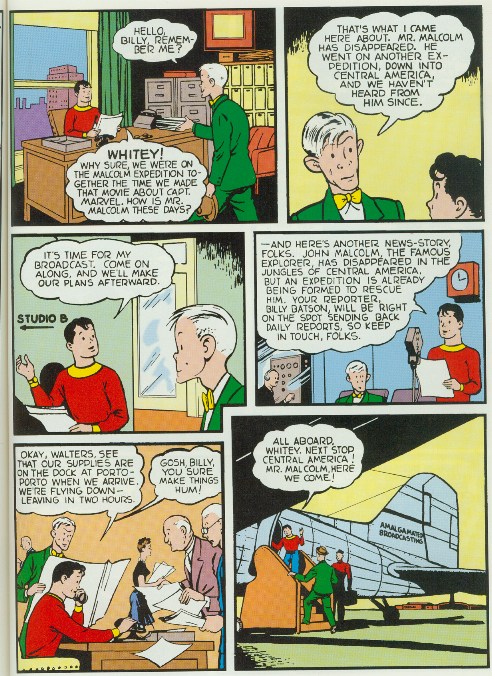
Billy "Whitey" Benedict appeared first in the Captain Marvel serial and later in the comic books themselves as one of the characters.
Adventures of Captain Marvel is a 1941 twelve-chapter film serial directed by John English and William Witney for Republic Pictures, adapted from the popular Captain Marvel comic book character then appearing in Fawcett Comics publications such as Whiz Comics and Captain Marvel Adventures. It starred Tom Tyler in the title role of Captain Marvel and Frank Coghlan, Jr. as his alter ego, Billy Batson.
This serial was the twenty-first of the sixty-six serials produced by Republic and their first comic book adaptation, not counting comic strips.
During an archaeological expedition to Siam, the power of the Golden Scorpion allows Billy Batson meets the ancient wizard Shazam, who grants him the power to become Captain Marvel and protect the device.
The lenses from the Golden Scorpion are divided among five scientists. The Scorpion attempts to acquire all of the lenses and the Scorpion device. Several expedition members are killed in his quest despite Captain Marvel's continual efforts to thwart the villain. Billy Batson soon decides that the man behind the Scorpion's mask is one of the archaelogical team.
The Scorpion discovers the connection between Billy and Captain Marvel. After capturing him, the Scorpion interrogates Billy for the secret. Billy transforms into Captain Marvel and reveals the Scorpion to be one of the scientists, who is then killed by an angry Siamese native. Captain Marvel tosses the scorpion statue into a volcano's molten lava to prevent it from ever being used for evil. Once it is destroyed, Captain Marvel is instantly transformed back into Billy Batson as there is no need for a protector for the scorpion.

 DVD front cover for The Adventures of Captain Marvel serial.
Adventures of Captain Marvel was budgeted at $135,553 although the final negative cost was $145,588 (a $10,035, or 7.4%, overspend).[1] It was filmed between December 23, 1940 and January 30, 1941 under the working title Captain Marvel.[1] The serial's production number was 1098.[1]
DVD front cover for The Adventures of Captain Marvel serial.
Adventures of Captain Marvel was budgeted at $135,553 although the final negative cost was $145,588 (a $10,035, or 7.4%, overspend).[1] It was filmed between December 23, 1940 and January 30, 1941 under the working title Captain Marvel.[1] The serial's production number was 1098.[1]
The serial was an outgrowth of Republic's failed attempt at a chapterplay to feature National Periodical Publications (today DC Comics)'s Superman, the script for which had become the studio's Mysterious Doctor Satan. The film company approached Fawcett Comics for their most popular character, and that publishing house did not refuse. Director William Witney was, however, skeptical about trying to film Captain Marvel after the problems with Superman.[2] As a result, Adventures of Captain Marvel became the first superhero film adaptation of a comic book.[3][4]
National attempted legal action to prevent the filming, citing the previous attempt at a Superman serial, but was unsuccessful. Writing in his autobiography of the period, William Witney revealed that in his deposition he had claimed that both Superman and Captain Marvel were derivatives of Popeye.[2] About a decade later, following a legal battle with National and a declining market, Fawcett ceased publication of all its comic series. In the 1970s, the Captain Marvel family of characters was licensed and revived (and ultimately purchased) by DC Comics.
The opening military scenes are taken from a 1938 Republic Pictures film Storm Over Bengal.
Tyler, who was described as clumsy, knocked over props with his "lanky arms". Punches in fight scenes would sometimes connect.[6]
Due to his performance in King of the Royal Mounted, Robert Strange as John Malcolm was the choice as the villain in this serial; however, in the end he was not actually the villain.[7]

Example of flying effects.
The flying effects were performed with a dummy. The dummy was slightly larger than life, at 7 feet tall, and made of paper mâché so that it weighed only 15 lbs. The uniform was made of thin silk and a cotton jersey. Four pulleys connected to each shoulder and calf, which were strung on two wires so the dummy moved along them by its own weight. The wires were attached to two objects across the view of the camera, and the dummy slid from one to the other, giving the appearance of flight. This system was originally intended for a Superman serial, a prototype of which was built but discarded.[6] The flying pose used for the dummy, arms outstretched and back arched, was based on drawing by Mac Raboy.[6] If Captain Marvel needed to be seen flying upwards, the cape was weighted down and the dummy slid backwards. The film of this was then reversed.[6]
Dave Sharpe was the human part of the effect. Dressed as Captain Marvel, he would leap from a high point with his body straight, as if able to fly, then roll to land at the last second. The combination of effects and stunts produced the overall illusion of a flying person. Sharpe also performed other stunts as Captain Marvel, such as back flipping and knocking down attacking natives in the first chapter.[6] Some shots of Captain Marvel flying were filmed with Tyler against rear projected clouds. However, some of these scenes show the wires used to hold him up.[6]
According to Stedman, the flight scenes were "the most successful illusion of such aerobatics ever put upon the screen, in serial or feature."[8]
The technique had been developed in the earlier serial Darkest Africa (1936) and was later used again in the "Rocket Man" serials (King of the Rocket Men, Radar Men from the Moon, Zombies of the Stratosphere and Commando Cody: Sky Marshal of the Universe) released during 1949-1953.
The much cheaper Columbia Pictures Superman serials which appeared in the late 1940s used animated cartoon sequences to represent various actions, most frequently Superman's flights (Columbia produced the cheapest serials of the period and producer Sam Katzman was notorious for cutting costs).
After the usage in Episode 1 of Superman, two Captain Marvel tunics were sported by actors in early episodes of the original U.S. version of the pioneering TV series Space Patrol. Very soon into the series, however, the Marvel tunics were replaced by shirts custom made for the series.
At The Science Fiction Museum and Hall of Fame in Seattle, Washington, one of the remaining Captain Marvel tunics has been on public display.[10]
Fawcett also published a sequel to the film in 1941. Titled The Return of the Scorpion, it was one of the four releases in its Dime Action Books series which imitated the format of the popular Big Little Books. The book is notable for reusing several characters from the movie and for being Otto Binder's first writing assignment at Fawcett; he went on to being a prolific scripter for the company.
In 1994, comic book writer/artist Jerry Ordway wrote and painted a graphic novel, The Power of Shazam!, and an ongoing comic book series spin-off which ran from 1995 to 1999. Ordway used the Republic serial as his initial inspiration in his handling of the Captain Marvel characters.[15]
* * *
The flight scenes in THE ADVENTURES OF CAPTAIN MARVEL compare favorably with similar scenes in Superman movies and television programs made years later. At the same time, this serial is obviously a less faithful adaptation than the later Superman serials, to which it has frequently been compared. Captain Marvel is shown machine-gunning bad guys, throwing them off roofs, and otherwise killing them in ways that he never did in the comic books. The actor playing Billy Batson is too old for the part. And the career of Captain Marvel ends with the serial, even though the comics would go on for years afterwards.
The Superman serials beat the pants off the Captain Marvel serial at the box office. It wasn't just that Superman was the more popular character. Captain Marvel was actually outselling Superman at some point and if he wasn't ahead at the time this serial was made, sales were somewhere in the same range.
But THE ADVENTURES OF CAPTAIN MARVEL was actually pretty good for a serial, something that can also be said for the same studio's CAPTAIN AMERICA, who no longer had the same secret identity and didn't even fight in World War II, which was still going on at the time it was made. These details look kind of odd, but they don't do away altogether with the entertainment value of the films.
The character of "Whitey" began with Billy Benedict's part in the serial.
oTw!cTQ~~60_3.jpg)

Poster with photo of Billy Benedict with Louise Curry, the feminine lead in the serial.
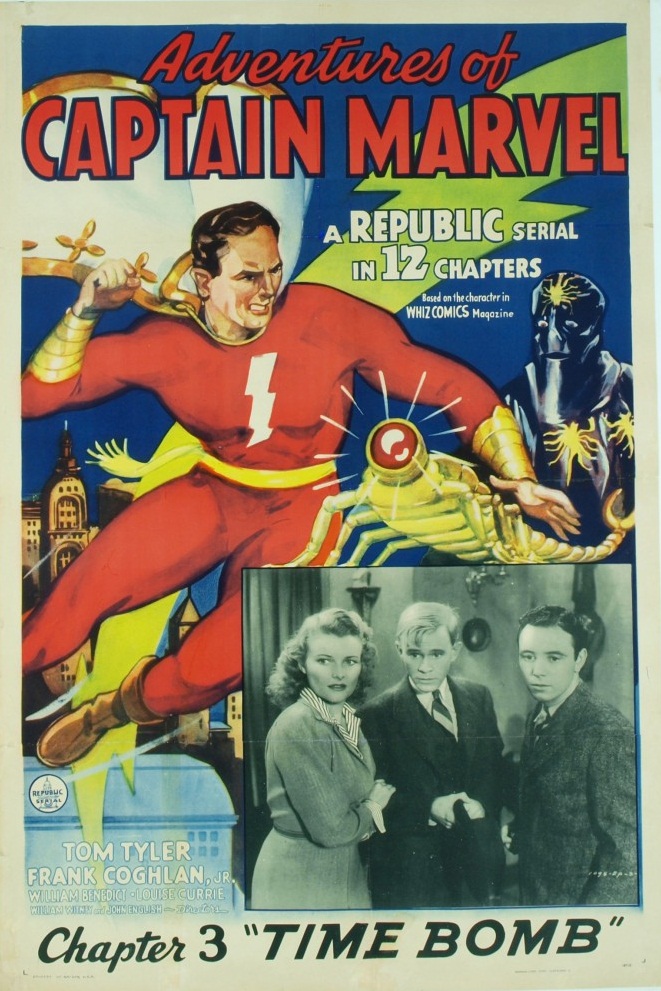
Poster with photo of Billy Benedict between Louise Curry and Frank Coughlin Jr., who played "Billy Batson". Billy Batson is the boy who is transformed into Captain Marvel whenever he speaks the magic word "Shazam".
ofGG0f!~~60_3.jpg)
o,yiBH!~~60_3.jpg)


William Benedict (April 16, 1917 – November 29, 1999) was an American actor. Born in Haskell, Oklahoma, he took part in school theatricals, and on leaving school he made his way to Hollywood. His first film was $10 Raise (1935) starring Edward Everett Horton, which launched Benedict on a busy career. The blond-haired Benedict almost always played juvenile roles, such as newsboys, messengers, office boys, and farmhands. In 1939, when Universal Pictures began its Little Tough Guys series to compete with the popular Dead End Kids features, Billy Benedict was recruited into the cast. These films led him into the similar East Side Kids movies (usually playing a member of the East Side gang, but occasionally in villainous roles). The East Side Kids became The Bowery Boys in 1946, and Benedict stayed with the series (as "Whitey") through the end of 1951.
Other films included Way Down East (1935) with Henry Fonda, My Little Chickadee (1940) starring W. C. Fields and Mae West, The Ox-Bow Incident (1943) with Henry Fonda, The Sting (1973) with Paul Newman and Robert Redford, and Farewell, My Lovely (1975). Benedict never shook his juvenile image completely, and continued to play messengers and news vendors well into his sixties. He also worked often in television commercials.[1]


Billy "Whitey" Benedict appeared first in the Captain Marvel serial and later in the comic books themselves as one of the characters.
Adventures of Captain Marvel
From Wikipedia, the free encyclopedia
| Adventures of Captain Marvel | |
|---|---|
 Original theatrical poster for Adventures of Captain Marvel Episode 10: "Doom Ship" | |
| Directed by | William Witney John English |
| Produced by | Hiram S. Brown, Jr. |
| Screenplay by | Ronald Davidson Norman S. Hall Arch B. Heath Joseph Poland Sol Shor |
| Based on | Characters by Bill Parker C. C. Beck |
| Starring | Tom Tyler Frank Coghlan, Jr. William Benedict Louise Currie Robert Strange Harry Worth Bryant Washburn John Davidson |
| Music by | Cy Feuer |
| Cinematography | William Nobles |
| Distributed by | Republic Pictures |
| Release date(s) |
|
| Running time | 12 chapters / 216 minutes[1] |
| Country | United States |
| Language | English |
| Budget | $135,553 (negative cost: $119,343)[1] |
This serial was the twenty-first of the sixty-six serials produced by Republic and their first comic book adaptation, not counting comic strips.
Plot
The serial featured an adaptation of the Fawcett Comics superhero, placed within an original story. He fights a masked criminal mastermind called The Scorpion who is determined to gain control of a magical weapon disguised as a scorpion figurine.During an archaeological expedition to Siam, the power of the Golden Scorpion allows Billy Batson meets the ancient wizard Shazam, who grants him the power to become Captain Marvel and protect the device.
The lenses from the Golden Scorpion are divided among five scientists. The Scorpion attempts to acquire all of the lenses and the Scorpion device. Several expedition members are killed in his quest despite Captain Marvel's continual efforts to thwart the villain. Billy Batson soon decides that the man behind the Scorpion's mask is one of the archaelogical team.
The Scorpion discovers the connection between Billy and Captain Marvel. After capturing him, the Scorpion interrogates Billy for the secret. Billy transforms into Captain Marvel and reveals the Scorpion to be one of the scientists, who is then killed by an angry Siamese native. Captain Marvel tosses the scorpion statue into a volcano's molten lava to prevent it from ever being used for evil. Once it is destroyed, Captain Marvel is instantly transformed back into Billy Batson as there is no need for a protector for the scorpion.
Cast
- Tom Tyler as Captain Marvel
- Frank Coghlan, Jr. as Billy Batson, radio operator with the Malcolm Expedition and secret identity of Captain Marvel.
- William Benedict as Whitey Murphy, a friend of Billy Batson.
- Louise Currie as Betty Wallace, a friend of Billy Batson.
- Robert Strange as John Malcolm, leader of the Malcolm Expedition.
- Harry Worth as Prof Luther Bentley, a member of the Malcolm Expedition and the mystery villain The Scorpion.
- Bryant Washburn as Harry Carlyle
- John Davidson as Tal Chotali, the Malcolm Expedition's guide.
- George Pembroke as Dr. Stephen Lang, a member of the Malcolm Expedition.
- Peter George Lynn as Prof Dwight Fisher, a member of the Malcolm Expedition.
- Reed Hadley as Rahman Bar, the native chief in the Valley of the Tombs.
- Jack Mulhall as Howell
- Kenneth Duncan as Barnett
- Nigel De Brulier as Shazam, the wizard who gives Billy the power to become Captain Marvel.
- Tetsu Komai as Chan Lai
- Stanley Price as Owens
- Gerald Mohr as the voice of The Scorpion (uncredited)
Production

The serial was an outgrowth of Republic's failed attempt at a chapterplay to feature National Periodical Publications (today DC Comics)'s Superman, the script for which had become the studio's Mysterious Doctor Satan. The film company approached Fawcett Comics for their most popular character, and that publishing house did not refuse. Director William Witney was, however, skeptical about trying to film Captain Marvel after the problems with Superman.[2] As a result, Adventures of Captain Marvel became the first superhero film adaptation of a comic book.[3][4]
National attempted legal action to prevent the filming, citing the previous attempt at a Superman serial, but was unsuccessful. Writing in his autobiography of the period, William Witney revealed that in his deposition he had claimed that both Superman and Captain Marvel were derivatives of Popeye.[2] About a decade later, following a legal battle with National and a declining market, Fawcett ceased publication of all its comic series. In the 1970s, the Captain Marvel family of characters was licensed and revived (and ultimately purchased) by DC Comics.
The opening military scenes are taken from a 1938 Republic Pictures film Storm Over Bengal.
Casting
Republic cast Frank Coghlan as Billy Batson due to his physical resemblance to the character.[5] However, there was some criticism that Tom Tyler did not sufficiently resemble the "beefy, baby-faced Captain Marvel."[5] At the time, Tyler was a weightlifting champion and the costume matched Captain Marvel's original appearance, even down to slenderness. The appearance of the comic version had changed by this time, however.[6]Tyler, who was described as clumsy, knocked over props with his "lanky arms". Punches in fight scenes would sometimes connect.[6]
Due to his performance in King of the Royal Mounted, Robert Strange as John Malcolm was the choice as the villain in this serial; however, in the end he was not actually the villain.[7]
Special effects

Dave Sharpe was the human part of the effect. Dressed as Captain Marvel, he would leap from a high point with his body straight, as if able to fly, then roll to land at the last second. The combination of effects and stunts produced the overall illusion of a flying person. Sharpe also performed other stunts as Captain Marvel, such as back flipping and knocking down attacking natives in the first chapter.[6] Some shots of Captain Marvel flying were filmed with Tyler against rear projected clouds. However, some of these scenes show the wires used to hold him up.[6]
According to Stedman, the flight scenes were "the most successful illusion of such aerobatics ever put upon the screen, in serial or feature."[8]
The technique had been developed in the earlier serial Darkest Africa (1936) and was later used again in the "Rocket Man" serials (King of the Rocket Men, Radar Men from the Moon, Zombies of the Stratosphere and Commando Cody: Sky Marshal of the Universe) released during 1949-1953.
The much cheaper Columbia Pictures Superman serials which appeared in the late 1940s used animated cartoon sequences to represent various actions, most frequently Superman's flights (Columbia produced the cheapest serials of the period and producer Sam Katzman was notorious for cutting costs).
Costume
One of the tunics later appeared as the costume of a member of the Kryptonian science counsel in the first episode of The Adventures of Superman television show, filmed in 1951.[9] The lightning bolt on the tunic is partially concealed by means of an oversized collar around the actor's neck.After the usage in Episode 1 of Superman, two Captain Marvel tunics were sported by actors in early episodes of the original U.S. version of the pioneering TV series Space Patrol. Very soon into the series, however, the Marvel tunics were replaced by shirts custom made for the series.
At The Science Fiction Museum and Hall of Fame in Seattle, Washington, one of the remaining Captain Marvel tunics has been on public display.[10]
Release
Theatrical
Adventures of Captain Marvel's official release date was March 28, 1941, although this is actually the date the sixth chapter was made available to film exchanges.[1] The serial was re-released on April 15, 1953 under the title Return of Captain Marvel, between the first runs of Jungle Drums of Africa and Canadian Mounties vs. Atomic Invaders.[1] Due to the 'nostalgia' craze in the spring of 1966 resulting from the hit Batman TV show, the serial was re-released as a 4-hour movie compiling all 12 chapters.Home media
Republic Pictures released the serial as a two-tape VHS set in 1995. The serial was released on DVD in 2003.Critical reception
Harmon and Glut claim that Adventures of Captain Marvel is "unquestionably one of the finest movie serials ever made, possible the best with the exception of the three Flash Gordon epics."[6] Cline describes this as one of the most outstanding of all serials[11] and Republic's "masterpiece."[7] He writes that Tyler's "striking performance...remains in thousands of minds as the most memorable serial hero of all time - bar none."[12]Influence
The characters of Betty Wallace, Whitey Murphy, and John Malcom all appeared in the Fawcett comics in the 1940s starting with "Capt. Marvel And The Temple Of Itzalotahui" (Whiz Comics #22, Oct. 3, 1941) featuring Murphy and Malcolm;[13] Murphy made several appearances in the 1970s DC Comics incarnation of Captain Marvel.[14]Fawcett also published a sequel to the film in 1941. Titled The Return of the Scorpion, it was one of the four releases in its Dime Action Books series which imitated the format of the popular Big Little Books. The book is notable for reusing several characters from the movie and for being Otto Binder's first writing assignment at Fawcett; he went on to being a prolific scripter for the company.
In 1994, comic book writer/artist Jerry Ordway wrote and painted a graphic novel, The Power of Shazam!, and an ongoing comic book series spin-off which ran from 1995 to 1999. Ordway used the Republic serial as his initial inspiration in his handling of the Captain Marvel characters.[15]
Chapters
- "Curse of the Scorpion" (30 min.)
- "The Guillotine" (16 min.)
- "Time Bomb" (17 min.)
- "Death Takes the Wheel" (16 min.)
- "The Scorpion Strikes" (16 min.)
- "Lens of Death" (16 min.)
- "Human Targets" (17 min.)
- "Boomerang" (17 min.)
- "Dead Man's Trap" (16 min.)
- "Doom Ship" (16 min.)
- "Valley of Death" (16 min.)
- "Captain Marvel's Secret" (16 min.)
References
- ^ a b c d e f g h i Mathis, Jack (1995). Valley of the Cliffhangers Supplement. Jack Mathis Advertising. pp. 3, 10, 52–53. ISBN 0-9632878-1-8.
- ^ a b Witney, William. In a Door, Into a Fight, Out a Door, Into a Chase: Moviemaking Remembered by the Guy at the Door. (McFarland & Company) ISBN 0-7864-2258-0
- ^ Stedman, Raymond William (1971). "5. Shazam and Good-by". Serials: Suspense and Drama By Installment. University of Oklahoma Press. p. 125. ISBN 978-0-8061-0927-5. "First superhero "taken directly from a comic book""
- ^ Cline, William C. (1984). "2. In Search of Ammunition". In the Nick of Time. McFarland & Company, Inc.. p. 20. ISBN 0-7864-0471-X. ""Adventures of Captain Marvel in 1941 pioneered a completely new type of screen champion - the SuperHero [sic].""
- ^ a b Cline, William C. (1984). "2. In Search of Ammunition". In the Nick of Time. McFarland & Company, Inc.. pp. 20, 26. ISBN 0-7864-0471-X.
- ^ a b c d e f g h Harmon, Jim; Donald F. Glut (1973). "9. The Superheroes "Could Superman Knock Out Captain Marvel"". The Great Movie Serials: Their Sound and Fury. Routledge. pp. 219, 222, 223, 226, 227, 230. ISBN 978-0-7130-0097-9.
- ^ a b Cline, William C. (1984). "9. They Who Also Serve (The Citizens)". In the Nick of Time. McFarland & Company, Inc.. p. 142. ISBN 0-7864-0471-X.
- ^ Stedman, Raymond William (1971). "5. Shazam and Good-by". Serials: Suspense and Drama By Installment. University of Oklahoma Press. p. 127. ISBN 978-0-8061-0927-5. ""It was the most successful illusion of such aerobatics ever put upon the screen, in serial or feature.""
- ^ Adventures of Superman-The Complete First Season (1952; Warner Home Video; Release Date: 10-18-05; Episode 1, "Superman on Earth.")
- ^ "costume display". Flickr. http://www.flickr.com/photos/calamityjon/2316048043/. Retrieved 23 February 2011.
- ^ Cline, William C. (1984). "3. The Six Faces of Adventure". In the Nick of Time. McFarland & Company, Inc.. p. 37. ISBN 0-7864-0471-X.
- ^ Cline, William C. (1984). "5. A Cheer for the Champions (The Heroes and Heroines)". In the Nick of Time. McFarland & Company, Inc.. p. 83. ISBN 0-7864-0471-X.
- ^ "Whiz Comics 22 "Capt. Marvel And The Temple Of Itzalotahui"". Silverage.greatnow.com. 1941-10-03. http://silverage.greatnow.com/reviews/Whiz_Comics_22.htm. Retrieved 2011-01-31.
- ^ "The Earth-S Index". Darkmark6.tripod.com. http://darkmark6.tripod.com/shazam_index.html. Retrieved 2011-01-31.
- ^ (April 1998) Interview with Jerry Ordway. WestfieldComics.com. Retrieved April 10, 2009.
- ^ Cline, William C. (1984). "Filmography". In the Nick of Time. McFarland & Company, Inc.. p. 230. ISBN 0-7864-0471-X.
External links
- Adventures of Captain Marvel at the Internet Movie Database
- Adventures of Captain Marvel is available for free download at the Internet Archive [more]
* * *
The flight scenes in THE ADVENTURES OF CAPTAIN MARVEL compare favorably with similar scenes in Superman movies and television programs made years later. At the same time, this serial is obviously a less faithful adaptation than the later Superman serials, to which it has frequently been compared. Captain Marvel is shown machine-gunning bad guys, throwing them off roofs, and otherwise killing them in ways that he never did in the comic books. The actor playing Billy Batson is too old for the part. And the career of Captain Marvel ends with the serial, even though the comics would go on for years afterwards.
The Superman serials beat the pants off the Captain Marvel serial at the box office. It wasn't just that Superman was the more popular character. Captain Marvel was actually outselling Superman at some point and if he wasn't ahead at the time this serial was made, sales were somewhere in the same range.
But THE ADVENTURES OF CAPTAIN MARVEL was actually pretty good for a serial, something that can also be said for the same studio's CAPTAIN AMERICA, who no longer had the same secret identity and didn't even fight in World War II, which was still going on at the time it was made. These details look kind of odd, but they don't do away altogether with the entertainment value of the films.
The character of "Whitey" began with Billy Benedict's part in the serial.
Whitey is most prominently featured on this poster, but also appears on others as well.
Whitey is prominently shown on many of these posters.
Tom Tyler as Captain Marvel with the scorpion. Louise Currie and Billy Benedict at right center.

Frank Coghlin, Louise Currie, Billy Benedict.
Billy Benedict and Tom Tyler as Captain Marvel.

The comic book version of Whitey is clearly recognizable as a depiction of Billy Benedict.
And actually I think Billy Benedict was one of the best things the serial had going for it.
William Benedict
From Wikipedia, the free encyclopedia
| William Benedict | |
|---|---|
 William Benedict. | |
| Born | April 16, 1917 Haskell, Oklahoma, U.S. |
| Died | November 30, 1999 (aged 82) Haskell, Oklahoma, U.S. |
| Occupation | Actor |
| Years active | 1935–1992 |
| Spouse(s) | Dolly Benedict (1969-?) |
Other films included Way Down East (1935) with Henry Fonda, My Little Chickadee (1940) starring W. C. Fields and Mae West, The Ox-Bow Incident (1943) with Henry Fonda, The Sting (1973) with Paul Newman and Robert Redford, and Farewell, My Lovely (1975). Benedict never shook his juvenile image completely, and continued to play messengers and news vendors well into his sixties. He also worked often in television commercials.[1]
Death
Benedict died at age 82 on November 29, 1999 at Los Angeles' Cedars-Sinai Medical Center.[1]References
- ^ a b Staff. "William Benedict Character Actor, 82", The New York Times, November 30, 1999. Accessed March 30, 2009.
External links

Billy Benedict went on to make other serials.
PERILS OF NYOKA

With Clayton Moore at left and Kay Aldridge as Nyoka, and Whitey at right.
BRENDA STAR
ADVENTURES OF THE FLYING CADETS
Billy Benedict also appeared in the "East Side Kids" series, which developed into "The Bowery Boys".
JINX MONEY
Whitey at left, Leo Gorcey at center, Huntz Hall at rear.
MASTER MINDS
Glenn Strange as "Atlas", left, Whitey, Leo Gorcey at right.
BLUES BUSTERS
Whitey, Leo Gorcey, Bernard Gorcey, Huntz Hall, David Gorcey
BLUES BUSTERS also had Phyllis Coates in it.
She later played "Lois Lane" on the first season of the Superman show. Which is sort of like having characters from Captain Marvel and Superman stories running into each other.
LATER YEARS
Billy Benedict went on to other things after the Bowery Boys series ended. He frequently played the same sort of parts as an older man that he had played as a younger man. Same as with the Bowery Boys. Nobody seemed to mind.
THE MONKEES ( TV Series )
THE STING

I guess he liked his work, he went right on working after he was old enough to retire.
Billy Benedict Serials:
A
Subscribe to:
Posts (Atom)